
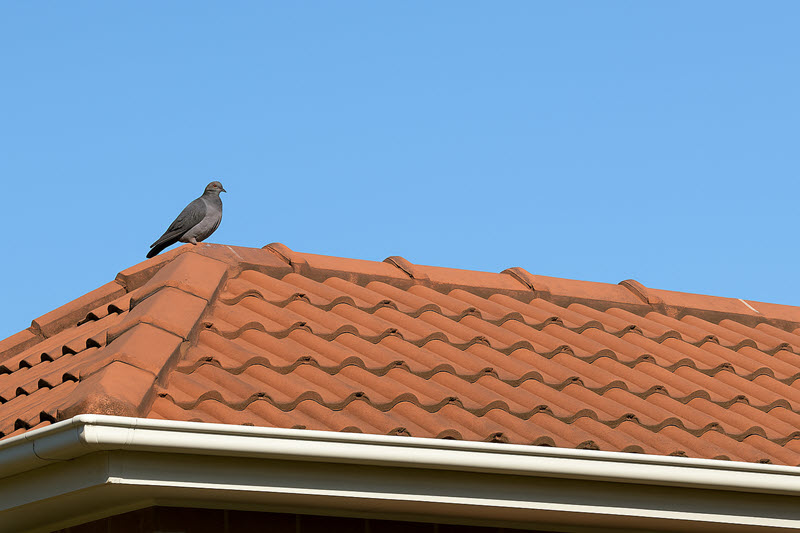
Over the years I’ve spent on rooftops — in Australia and overseas — I’ve come across all sorts of birds making themselves at home under eaves, in gutters, and even inside roof cavities. And as a keen birdwatcher and big fan of Australian native birds, I get it. Roofs offer a pretty ideal setup for nesting birds.
But as a roofer? I also know the damage they can cause if left unchecked.
If you’ve noticed feathers, droppings, or scratching sounds up high, chances are you’ve got some feathered tenants. Let’s talk about why they’re up there — and what that means for looking after your roof.
Why Birds Choose Roofs to Nest
Roofs tick a lot of boxes for nesting birds. For starters, they’re high up — out of reach of predators like cats, foxes, and humans (apart from roofers lol). Eaves, gaps under tiles, and spaces behind solar panels offer cosy little pockets that are protected from wind and rain.
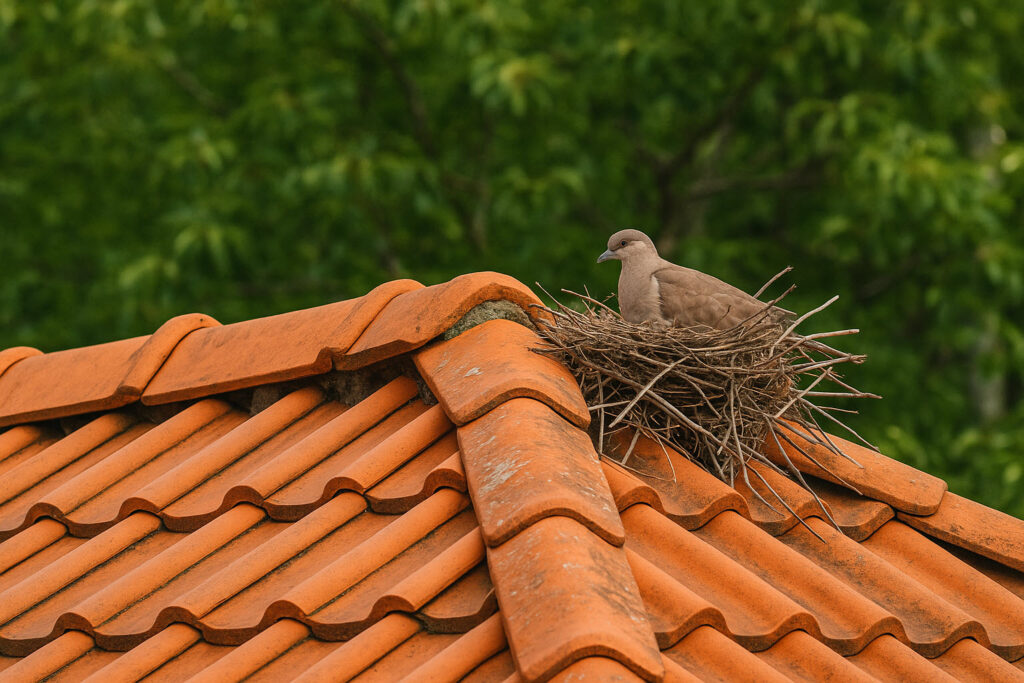
In urban areas, birds often struggle to find safe natural nesting sites such as large, tall trees, so your roof becomes the next best option. They’ll bring in sticks, leaves, and anything else they can find to build their nests. If there’s a quiet, undisturbed part of the roof — say a chimney that’s not in use or a gap in the fascia — they’ll move in fast.
Common Culprits on Aussie Roofs
Across Australia, I’ve seen all sorts of birds nesting on roofs. Some of the usual suspects are pigeons, Indian mynas, starlings, and sparrows — species that thrive around human activity and tend to move in wherever they can.
You’ll also spot native birds like noisy miners, magpies, swallows and crested pigeons. Some are more aggressive about defending their nests (I’m looking at you, magpies), while others quietly nest and slip away at season’s end.
It’s worth knowing that many native birds are protected, so disturbing their nests during breeding season is off-limits by law. More on that in a moment.
What Nesting Birds Mean for Roof Maintenance
As much as I enjoy seeing birds around the yard, once they get into your roof, it becomes a problem.
For one, nests in gutters or downpipes cause blockages. Water backs up, overflows, and can cause mould or damage to fascias, walls, or even internal ceilings. I’ve seen plenty of soggy eaves that could’ve been avoided with a simple check for nest build-up.
Birds also damage roofing materials by dislodging tiles or lifting sheet edges to squeeze underneath. In some cases, they’ll nest inside cavities, pulling out insulation or clogging up ventilation paths.
Then there’s the noise — scratching, chirping, fluttering — not to mention the droppings. Bird poo is more than just messy. It’s acidic and can corrode paint, metal, and other roofing surfaces if left too long. And don’t forget the pests: mites, insects, and sometimes even snakes follow nests looking for food or warmth.
Prevention and Safe Removal
Your best defence is regular roof checks — especially heading into nesting season (spring) followed by regular washing. Birds have good memory. If their nests get constantly washed out after a good professional roof cleaning, “they will go somewhere else” – according to my friend Caleb, a specialist in roof cleaning in Adelaide .
When you spot signs like loose tiles, blocked gutters, or twigs sticking out from roof edges. Early intervention is always easier than dealing with a full-blown infestation.
If you’ve got an old or abandoned nest, you can usually remove it yourself — just wear gloves and a mask, as dried droppings and nesting material can carry bacteria and mites.
If birds are still actively using the nest, things get tricky. Native species like swallows, magpies, or willie wagtails are protected under Australian law, and it’s illegal to disturb their nests while they’re breeding. In that case, the best thing to do is wait until the nesting season is over, then block off the entry points to stop them returning next year.
One of the most common nesting spots these days is under solar panels. The space beneath makes a perfect sheltered ledge for pigeons, especially. If that’s the case, it’s worth getting a professional to install mesh or bird-proofing systems to block them out — without affecting your solar setup.
When to Call in a Professional
Some situations are best left to the pros — especially if birds have made it into your roof cavity or chimney, or you’re unsure whether they’re a protected species. Licensed bird removal specialists can assess the situation and remove nests humanely and legally.
They can also install preventative systems — like gutter guards, mesh barriers, or even simple deterrents — to stop birds nesting again in future.
Final Thoughts
Look, I love birds. But I’ve seen firsthand what they can do to a roof when they get a bit too comfortable. You don’t have to pick between being a bird lover and looking after your home — you just need to stay on top of things.
A few simple checks every season, some smart prevention, and a bit of patience during nesting time can go a long way.
Birds belong in trees, not in your roof cavity. Keep them out, keep your roof intact, and everyone’s happy.
– Anthony