If you’ve ever worked a tin roof in the Australian summer, you’ll know the heat isn’t just uncomfortable — it can be downright dangerous. Between the blazing sun, hot surfaces underfoot, and no shade in sight, roofing in extreme weather pushes your body harder than most jobs out there.
I’ve spent decades up on roofs in Australia, the US (includng Florida and Hawaii), and the UK. The good news? With the right approach, you can stay safe and get the job done — without risking your health.
Why Heat Is a Real Hazard on the Roof
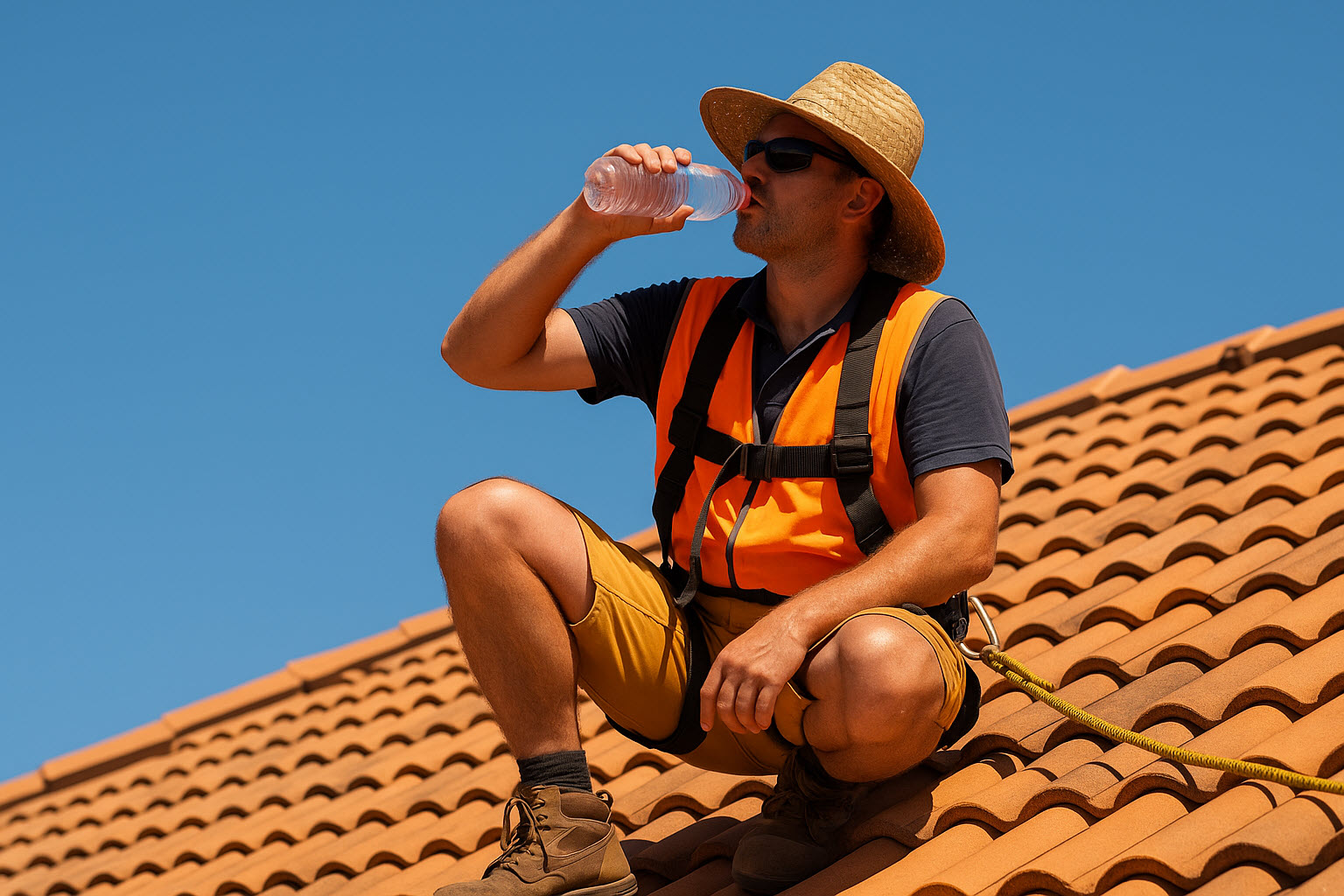
When you’re roofing in summer, you’re not just dealing with the air temperature. Roofing materials — especially metal and dark tiles — can heat up well past 50 or even 60°C. Add the fact that you’re usually exposed to full sun with no shade or breeze, and it’s no surprise that heat stress is a serious risk.
Unlike other trades where you might duck into some aircon now and then, roofers are often out in the elements all day. That makes it essential to understand the risks and how to manage them. After years of tiled roof restorations in Melbourne, I really had to up my game in terms of personal safety.
What Can Go Wrong?
There are a few key health risks that roofers need to watch for when working in hot weather:
Dehydration
When you’re sweating all day, it’s easy to become dehydrated without realising it. That can lead to headaches, confusion, and slower reaction times — all dangerous things when you’re working at heights.
Heat exhaustion and heat stroke
This one can sneak up on you. Early signs include dizziness, fatigue, and nausea. If left unchecked, it can progress to heat stroke — a medical emergency that needs urgent attention. I’ve seen blokes try to push through, and it never ends well.
Sunburn and skin cancer
Australia has some of the highest UV levels in the world, and that means serious skin damage if you’re not properly protected. Long sleeves and sunscreen aren’t optional — they’re essential.
Loss of concentration and coordination
Heat messes with your focus. That means a greater risk of slips, trips, and mistakes — things that can turn deadly on a roof.
How to Stay Safe on Hot Days
A bit of planning and awareness goes a long way. Here are the basics every roofer should follow when the heat ramps up:
- Hydration is key. Drink water regularly throughout the day — don’t wait until you’re thirsty. If you’re sweating buckets, add electrolytes to replace lost salts. Avoid too much coffee or energy drinks, which can make dehydration worse.
- Start early, finish early. In summer, I always aimed to be done by early arvo. Getting a jump on the day while it’s cooler can make a world of difference. And if the forecast is a scorcher, think seriously about whether it’s worth working at all. A good site surpervisor should keep their team safe.
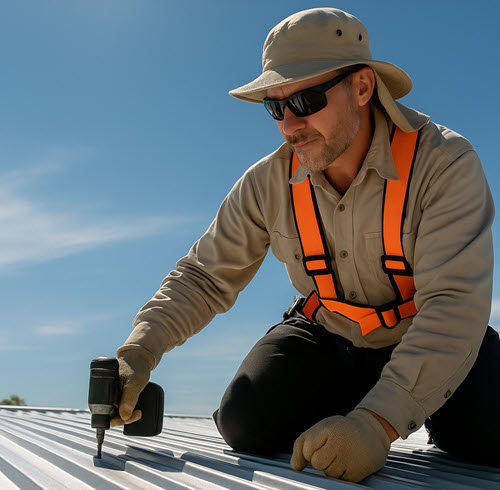
- Wear the right gear. Long-sleeved, lightweight workwear made from breathable material is your best friend. It protects your skin without trapping heat. A wide-brimmed hat or a hard hat with a sun flap helps shield your face and neck. And always wear sunglasses with proper UV protection.
- Don’t skimp on sunscreen. Use SPF 50+ and reapply every couple of hours, especially if you’re sweating it off. Sunburn isn’t just painful — it adds to your body’s heat load and increases your risk of long-term damage.
- Take regular breaks. Find shade, cool down, and give your body a chance to recover. Even five or ten minutes every hour can make a difference.
Keep an Eye on Your Mates
One thing I’ve learned over the years is that heat stress doesn’t always announce itself loudly. Sometimes the signs are subtle — a mate getting unusually quiet, working slower, or looking a bit wobbly on their feet.
If someone’s not right, call it out. Step off the roof, get some water and rest, and if things aren’t improving, don’t muck around — call for help. No job is worth risking someone’s life.
A Final Word from an Old Roofer
There’s a bit of a tough-it-out culture in the trades — especially among roofers. But there’s no medal for working through a heatwave. Heatstroke, dehydration, and skin cancer aren’t signs of hard work — they’re signs that something needs to change.
The best tradies I’ve worked with weren’t just good with their hands — they looked after themselves and their crew. If you want a long career in this game, you need to respect the conditions.
So check the forecast, wear your gear, drink your water, and most importantly — know when to down tools.
Stay safe out there,
– Anthony